I didn’t get to where I am in my life and career on my own.
Dispatches From The Internets
Mentorship
My Increasing Wariness of Dogmatism

Many thanks to Chris Coyier for this piece on dogmatism. Framing is so important! Ultimately we all want to build a Web that works for as many people as possible while being fast, reliable, and a joy to create… and we can only do it if we work together.
Inclusive Design Tips: Presenting Information in Multiple Ways

This is an excellent primer on how thinking about experience as a continuum will help you build interfaces that work for a broader cross-section of people.
Replacing the Jet Engine While Still Flying
Building a browser is hard. Making major changes to an existing one is even harder. I love it when folks talk about the processes and challenges of making the Web work.
Does Google execute JavaScript?

Maybe.
Maker Series Recap: Aaron Gustafson

This is an excellent recap of my recent Maker Series workshop. Thanks for participating Philip!
Accessible Emoji, Tweaked
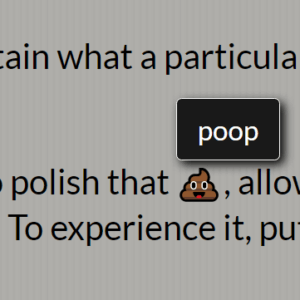
Tooltips for emoji… I love this!
Duplicate IDs in responsive webpage
A little experiment:
The purpose of this page is to demonstrate that duplicate IDs can have real consequences even when only one view can ever be visible at any given time.
A Cautionary Tale: DOJ Intervenes in Another Web Accessibility Lawsuit

Supermarket chain Winn Dixie claims that Title III of the Americans with Disabilities Act doesn’t apply online in Gil v. Winn Dixie and the U.S. Department of Justice steps in to set them straight:
In response to Winn-Dixie’s position that Title III applies only to its physical location. DOJ cited the language of the ADA which says that “Title III applies to discrimination in the goods and services ‘of’ a place of public accommodation, rather than being limited to those goods and services provided ‘at’ or ‘in’ a place of public accommodation.” DOJ also argued Title III’s application to the website at issue is consistent with every other court decision to have addressed the coverage of websites with a nexus to brick and mortar locations.
Writing for 9 year olds? Six expert tips for creating great accessible web content for everyone

This brief post includes some great tips on writing for readers, regardless of their actual age or reading level.